Showing posts with label week 3. Show all posts

Wednesday, March 21, 2012

week 3: 3 readings of Organizational Communication


In week 3 tutorial, we were divided into three group to discuss the 3 readings given to compare and to give a bigger picture on the research of organisational communication that had been done in the past. The three readings are (1) Organizational Communication: Prelude and Prospects by Thompkins and Thibault, (2) Employee/Organisational Communications by Berger and (3) Research on Organiszational Communication: the Case of Sweden by Johansson.

(1)    Organizational Communication: Prelude and Prospects by Thompkins and Thibault

This journal is reviewing on ‘The New Handbook of Organisational Communication: Advances in theory, research and methods’ book that assessed on the researches that had been done in US. It provided a brief history of the rubrics, categories and ideologies that have shaped the identity of the field. It also note on some trends in the study of organizational communication that is believed to demonstrate a certain maturation of the field in the each moves the field in ways that question and deconstruct categories of the past while integrating domains and methods thought to be permanently at adds with each other. Old terministic screens give way to more inclusive ones and division yields to merger and mergers are subdivided allowing the field of organisational communication to be enriched.

The review suggested that our future research will continue to extend past research by developing new perspectives on old issues and problems associated with communication and organisation. The traditional focus was on leader-follower communication, communication networks and structures, the creation, sensing and routing of information, information flow and participation in making decision, filtering and distortion of messages, communication channels, feedback processing. These will remain as significant areas of study. The research question may vary; much of the research will be expanding on topics that have a long history of study in organisational communication. Besides that, they have also stated of the rising of research traditions founded on the metaphors of “voice”, “discourse” and “performance” as part of maturation of the field. Finally, the analysis suggest that the field is now focusing more on communicational theorizing about organizing than in the recent past. Taylor’s (1993) argues that conversations are the stuff of organizations, conversations lead to narratives or text meaningful to the conversationalists and organization is a communication system. Redding (1972) on the other hand facilitate a view of organizations as communicational in nature, a perspective that we expect will be central to understanding the more fluid, fragmented and chaotic forms of organizations and organizing that are expected in the future.

In conclusion, communication and organization are equivalent, addressing organizing: it is the paint and the canvas, the figure and ground.

Referencing
Redding. W. C 1972, Communication within the organization: an interpretive review of theory and research, Industrial Communication Council, New York.

Taylor. J 1993, Rethinking the theory of organizational communication: how to read an organization, Ablex, Norwood, New Jersey.

Tompkins. P and Thibault. M 2001, Organizational communication: prelude and prospects, Sage Publication, USA.

(2)    Employee/Organisational Communications by Berger
Berger article describes the importance of organizational communication and basic internal communication processes, network and channels. It states the important issues in current practices and is concluded with 15 principles of effective communication.
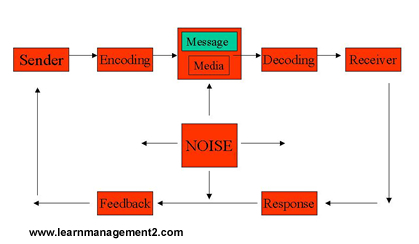
Internal communication matters because the functioning and survival of organizations is based on effective relationships (it grown out of communication) among individuals and groups. Communication helps to achieve goals, solve problems, motivate, build trust and creates a shared identity within a company. S-M-C-R model is a classic example by Shannon-Weaver (1949) for internal communication in being introduce where [S] information source encodes message [M] and send through a selected channel [C] to a receiver [R] who decodes them. As time passes it becomes more complex due to new media and high speed multi directional communication.
Communication level: Face-to-face & Group
Communication network: flow in an organisation that can be formal/informal, vertical/horizontal, diagonal or omnidirectional.
Communication channels: medium use to send and receive the message. Print (Memo, report), electronic (email, blog, voice mail, IMs) or F-T-F (interpersonal meetings, lunch, events)   
Internal communication has much evolved from the classical approaches to human relation approaches to human resources approaches to system approaches, and cultural approaches. All 5 live on in organizations-work rule, hierarchies, policies, training programs, work teams, job descriptions, socialization rituals, human resource department, job descriptions, customer focus and etc.
There are 4 contemporary issues in organizational communication and they are organizational identity, employee engagement, measurement and social media. The 15 principles of successful internal communications revolves around timeliness and content, channels, leadership roles, professional communicator roles, Participation and recognition, measurement, and culture.

      Referencing

      Shannon. C. E & Weaver. W 1949, A mathematical theory of communication, University of Illinois
      Press, Urbana.

      Berger. B. K 2008, Employee/organizational communications, institute for Public Relations, 
      viewed on 20 March 2012, from 

(3)    Research on Organizational Communication: the Case of Sweden by Johansson

Johansson article talks about the Swedish research on organization communication and it states that they are dominantly done through empirical, qualitative research. A wide definition of organizational communication is employed including research focusing on both internal and external communication. Majority of the studies are about public information that is spilt to health communication and crisis communication. Research on internal communication focused on leader-employee communication, organizational learning, sensemaking, communication strategies and communication efficiency.   

Mullern and Stein (1999) explain that the leader-employee communication is found still to be very leader-centered and one-way communication rather than dialogue. The authors wish to see communication between both is not fulfilled. Heide (2002) considers intranet have advantages as learning tools because it can enhance availability of information and acquire more active role of information seeking. Though, disadvantages would be that managers wouldn’t know if the co-workers understood the message the way they originally wanted and might cause problems in this sense. Alyesson (2002) resulting interpretations on meeting in private company disclose how communication both function as manifestation and source of common meaning and understandings of reality, power relations and communicative disorders.

There’s a drastic increase in the PR industry where they focused on publicity and advertising. ICT have brought radical changes that affect working conditions for most public relations practitioners. There are four types of agenda-setting work: Type 1 consists of open activities like press releases, press conferences and lobbying. Type 2 consists of creating events, research and basic data for ”facts and figures”-reports as well as recurrent news production. Type 3 consists of more covert methods, like bill writing for political parties, which suits a particular campaign or agenda. Type 4 is the special area of consultants, with issues management, opinion polls, alliance creation, engagement of debate writers and different types of intelligence activities. PR also covers on risk communication and crisis communication.
A conclusion was drawn by Johansson stating that more Swedish research in Organizational Communication is needed that will encompass both quantitative and qualitative methods. Though, the strength in Swedish research is that it has a close link between research and practice which can help strengthen individual’s communication competence in organizations. However, the weakness is lies in the difficulty of generalizing results as conditions differ widely in different organizations. 


Referencing

Heide. M 2002, Intranet: a new arena for communication and learning, Lund University.

Mullern. T & Stein. J 1999, Persuasive Leadership on rhetoric in strategic change, Student litteratur, Lund University.

Alyesson. M 2002, Communication, power and organization, critical interpretations of a business meeting, Norsted Juridik, 2nd ed, Stockholm.

Johansson. C 2007, Research on organizational communication: the case of Sweden, Nordicom Review. Vol 28, no 1, pg 93-110. 


Watch a video on an interview done with an CEO. 


Rob Friedman, director of executive communication at Eli Lilly, discusses the role his CEO plays in communication at their company. www.ragan.com


The organisational communication seems to be perfect.

"We don't want to UNDER Communicate, 
we want to OVER Communicate"

Saturday, March 17, 2012

Week 3: Topic 1: Organisational Communication Challenges


In this week lecture, I have learned on the definition of communication and organisation as well as the challenges that comes along with it. Communication itself is simply sending messages to one or more receivers. 


While organisation is a company or a social collectivity that is brought together by a goal or a specific interest. Thus, organisational communication is a complex interaction of process, people, messages, meaning and purposes (Shockley-Zalabak, 2009). Weick (1979) explains that communication is a core process of organizing within an organisation. Miller (2009) looks into four aspects of communication:

  1. Content: Task, innovation and relationship within each member of organisation.
  2. Direction: Communication flows vertically (classical top-down or new bottom-up) or horizontal (pier communication or flat communication with all members)
  3. Channel: Face-to-face, written, mediated and etc.
  4. Style: Formal or informal.
Contemporary communication in organisation becomes complex when issues such as globalisation, media, cultural diversity, changing in demographics and economic liberalism exist. This became a challenge due to how complicated this world have become. The three main issues that we are facing this era are globalization, climate change and change in demographics. The stakeholders involved are separated into internal which includes staff, employees, or members, and external Source: includes customer, suppliers or media. The stakeholders are the people that are either affected directly or indirectly on the way an organisational behave.


Side note, lecturer talks about how so much information can be found on the internet that literally allows us to ‘goggle it’ in time of uncertainties as well as for research purposes. It is said that babies born in the year 2010 and above are called Generation Alpha or Google Kids.


Source: google images

For week one and two, there was classes were mainly introducing the course and discussion on the assignments work throughout the course.

If you hate reading or just scrolled down my prior written summary without reading a single word, watch this video for more information on Communication challenges facing these days.


Reference:
Miller. K 2009, Organisational communication: approaches and process, 5th edition, Wadsworth, United States of America.

Shockley-Zalabak. P 2009, Fundamentals of organisational communication: knowledge, sensitivity, skills, values, 7th edition, Pearson Education, United States of America.

Weick. K. E 1979, The social phychology of organizing, Addison-Wesley Publishing, Reading, Massachusetts. 

Friday, March 16, 2012

Week 3: Human resources approaches and human relations


Due to the criticism on the machine metaphor, human relation and human resources approaches introduce the importance of human needs in the workplace. In human relation, the three approached are The Hawthorne Studies, Maslow Hierarchy of needs study and McGregor’s Theory X & Y. The Hawthorne studies was conducted in late 1920s and early 1930s, it was widely interpreted as indicating that management attention to workers and social communication was highly influential in increasing worker productivity. Next, Maslow Hierarchy of needs study is a basic theory of motivation applied to the organisational setting where it said that human needs are arranged in a hierarchy of prepotency, ranging from physiological needs to the need for self-actualize. Finally, McGregor’s Theory X & Y considers the assumptions that managers hold about employees, positing that Theory Y managers would behave in such a way as to maximize the productivity of employees. Human relations approaches are different from classical approach as we can have horizontal, face-to-face and informal communication about both task and social topics.

Human resources approach existed due to the dissatisfaction with the human relation approach because human relation approach failed to accumulate widespread empirical support and because some ideas could be instituted in half-hearted and manipulative ways. Human Resources approach tries to maximize both organisational productivity and individual employee satisfaction and it is accomplished through the intelligent use of human resources. We look at theories such as Blake and Mouton’s Managerial Grid where an example was provided on the dual focus on organisational effectiveness and individual needs, and Rensis Likert’s System demonstrates how human resources principles such as participation and innovation can be instituted in an organisational setting. This approach is different from classical and human relation because it has a broad communication content including task-related, social and innovation topics. The information flows in a wide variety of directions and emphasis on team-based interaction. It also uses a wide variety of channels matched to task needs and is relatively informal. 

For tutorial in human resources, we are required to discuss on the case study on Teamwork at the Marshall's processing plant as well as to create a communication strategy. For the outcome of our discussion please watch video below.

Thursday, March 15, 2012

week 3: Topic 2: Classical Approaches

This topic, I’ve learned in depth on the 3 classical theories that is being introduced includes Fayol’s Classical Management, Weber’s Theory of Bureaucracy and Taylor’s Scientific Management. We were also taught on the classical approaches of communication content, direction of communication flow, channel of communication and the communication style.

In classical theories, they describe organisations as machine when the impact of Industrial Revolution has changed the way people work. Employees are trained for a specific task for the division of labor, standardization and replace-ability where employees can be easily replaced and predictable outcome as machines is programmed to a specific amount of results.

Classical theory 1: Henri Fayol’s Classical Management


Foyal first described 5 job scope of management/manager (what is management)

  1. Planning: to determine goals for the company.
  2. Organising: to delegate jobs
  3. Command: to give proper instructions to employees
  4. Coordination: to make sure each department understands each other, creating a harmonized environment.
  5. Control: to be able to take charged to achieve goals and organising activities.
Foyal also came up with 4 principles of management (how management should be)

  1. Six Principles of Organisational Structure
·         Scalar chain: mainly on vertically top-down communication.
·         Unity of command: to take orders only from one leader.
·         Unity of direction: under the supervision of only one leader.
·         Division of labour: to be assigned on a specific/limited task.
·         Order: every employee has an appointed department and task.
·         Span of control: control the leader-staff ratio; limit the number of staff under a manager.

  1. Three Principles of Organisational Power
·         Centralization: to have one main central management that has control.
·         Authority & Responsibility: managers have the power to order/do something to certain extend.
·         Discipline: to ensure subordinates is obedient to the rules of organisation and managers.

  1. Three Principles of Organisational Reward
·         Remuneration of personnel: Bonus or financial motivation.
·         Equity: fairly treated
·         Tenure stability: ensure that all jobs are given enough time to complete.

  1. Three Principles of Organisational Attitude
·         Subordination of individual interest to general interest: eg if you need to miss work for the day, think about the rest of the co-workers and your manager position, you should at least call in to inform in order manager could re-arrange the work task for other staff for the day.
·         Initiative: anything we do should think and work for the best interest of the organisation.
·         Esprit de corps: promoting unity and team spirit for a more harmonious organisation.

Classical theory 2: Max Weber’s Theory of Bureaucracy


Weber came up with six aspects to explain his theory; some are pretty similar to Foyal’s theory.

Similar to Foyal:
  1. Hierarchical system of authority.
  2. Division of labour (task specialisation)
  3. Centralization of power
New aspects: 
  1. Closed system: nothing is disclosed to the external party or being influenced by it.
  2. Written rules: there is a specific printed regulation to be followed eg, handbook provided.
  3. Authority system: should be a rational legal authority team who delineate lines of authority in a fixed area of activity, action taken on the basis of and recorded in written rules. 
Weber listed his forms of legitimate authority

  1. Traditional authority : born to be in that position
  2. Charismatic authority: they are given the authority because they have to the power to influence eg, politicians, celebrity and etc.
  3. Rational-legal authority: they have the authority because they worked hard for it. This is the kind of leaders that most organisations are looking for.
Classical theory 3: Frederick Taylor’s Scientific Management.


Taylor focused on 4 elements of scientific management.

  1. Some people have the natural human instinct of taking it easy. They are called ‘natural soldiering
  2. Rewarding system through piecework where people are paid through the number of units achieved.
  3. There are workers who work faster in order to earn more and unscrupulous managers would rate fast workers normally and pay slower workers half the usual rate. They are ‘rate busting’
  4. On the other hand, slower workers hated the idea of ‘rate buster’. Thus they would team up and force fast workers to slow down so that they could get the usual rate as well. This is called ‘ systematic soldiering’
There is one best way to perform every job which is to just plainly follow the given direction of the work or following the recipe of it. It is important to have the proper selection of workers where each staff is rightly placed at the right time. Besides that, it is also important to provide trainings for the workers and to compensate them with some incentive plan. A company should also state clearly on the difference between management and workers.

Classical approach on communication process that is machine-like organisation could be viewed in terms of:
  1. Communication content where everything is work-related. There are no personal matters involved.
  2. Direction of communication flow is mainly focusing on vertical, top-down system.
  3. Channel of communication is through written or these days email for black & white purposes.
  4. Communication style is very formal eg punch cards, presentations, a certain language is imposed on verbal or non-verbal expression and etc.
Question: Are classical theories of management relevant for newly industrialized factories or applicable in today’s world?
It is believed that classical theories is still important especially in the bigger companies such as fast-food restaurant, military organisations, manufacturing and service organisations and etc, in order to keep every part of the organisation to run smoothly. However, many contemporary organisations value the free-flow of communication within the company for more feedback, input or ideas to be discussed within for a better improvement of the organisation.